Why a Kitchen Island Changes Everything
No single element transforms a kitchen like a well-designed island. It adds prep space, storage, seating, and becomes the natural gathering point for family and guests. But a poorly planned island can also block traffic flow, create awkward workspace, and waste valuable square footage. Here's how to get it right for your New Jersey home.
Do You Have Room for an Island?
The minimum clearance around an island is 42" on all sides (48" is better for two people working at once). This is a non-negotiable safety and code requirement in most NJ municipalities.
Minimum kitchen size for an island: Roughly 10 feet wide or 12 feet long (depending on layout).
If your kitchen is smaller, consider a rolling cart or a peninsula (an island attached to one wall) — these can provide similar benefits with less space requirements.
Island Sizes for Different Kitchens
Small Kitchens (10'–12' wide)
- Island size: 2'×4' to 3'×5'
- Use a single-sided base cabinet run (cabinets only on the kitchen side)
- Add seating on one short end with a 12"–15" overhang
- Keep the island to one level — no raised bar
Medium Kitchens (12'–15' wide)
- Island size: 3'×6' to 4'×8'
- Double-sided base cabinets (storage accessible from both sides)
- Seating for 3–4 on one side with a 12" overhang
- Can accommodate a sink or prep sink
Large Kitchens (15'+ wide)
- Island size: 4'×8' to 5'×10' or larger
- Full double-sided base cabinets plus drawers
- Sink, cooktop, or even a warming drawer built in
- Two-tier design with raised bar seating
Cabinet Configurations for Islands
Base Cabinets Only (Most Common)
Standard 24"-deep base cabinets facing the kitchen. Provides drawers and door storage. This is the most affordable and most flexible option.Double-Sided Islands
Cabinets on both sides of the island — kitchen side and seating side. The seating side typically uses open shelving, wine racks, or shallower cabinets. Requires a thicker island top (minimum 36" depth total for both cabinet runs).Drawer Banks
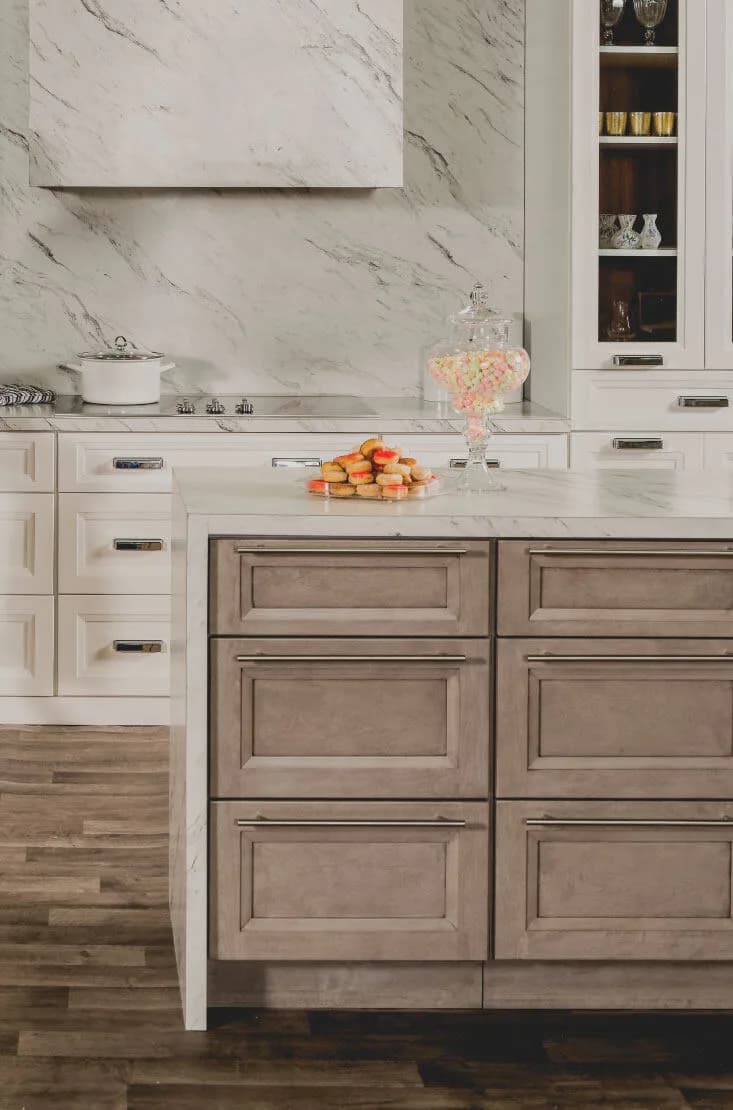
Replace cabinet doors with full-height drawer stacks. Drawer access is faster and more convenient than reaching into cabinets. Especially popular for:- Pots and pans drawers (deep, pot-size drawers)
- Utensil drawers
- Spice and pantry drawers
Specialty Island Features
- Microwave drawer — Built into the island cabinet at drawer height, keeps the microwave off the counter
- Wine/beverage cooler — Fits in a standard 24" base opening; great for entertaining
- Trash/recycling pullout — Keeps waste bins hidden and convenient
- Warming drawer — Popular for Shabbos prep in kosher kitchens
Island Heights and Overhangs
Standard counter height: 36" — matches your perimeter countertops and is comfortable for prep work.
Bar height: 42" — used for seating sections with bar stools. Requires a raised section on one side or a two-tier design.
Overhang for seating:
- 12" overhang = knee space for standard counter-height stool
- 15"–18" overhang = more comfortable legroom
- No structural support needed for overhangs up to 12"; longer overhangs need corbels or legs
Island Styles and Two-Tone Looks
One of the most popular trends: a different color or finish on the island than the perimeter cabinets.
Popular combinations:
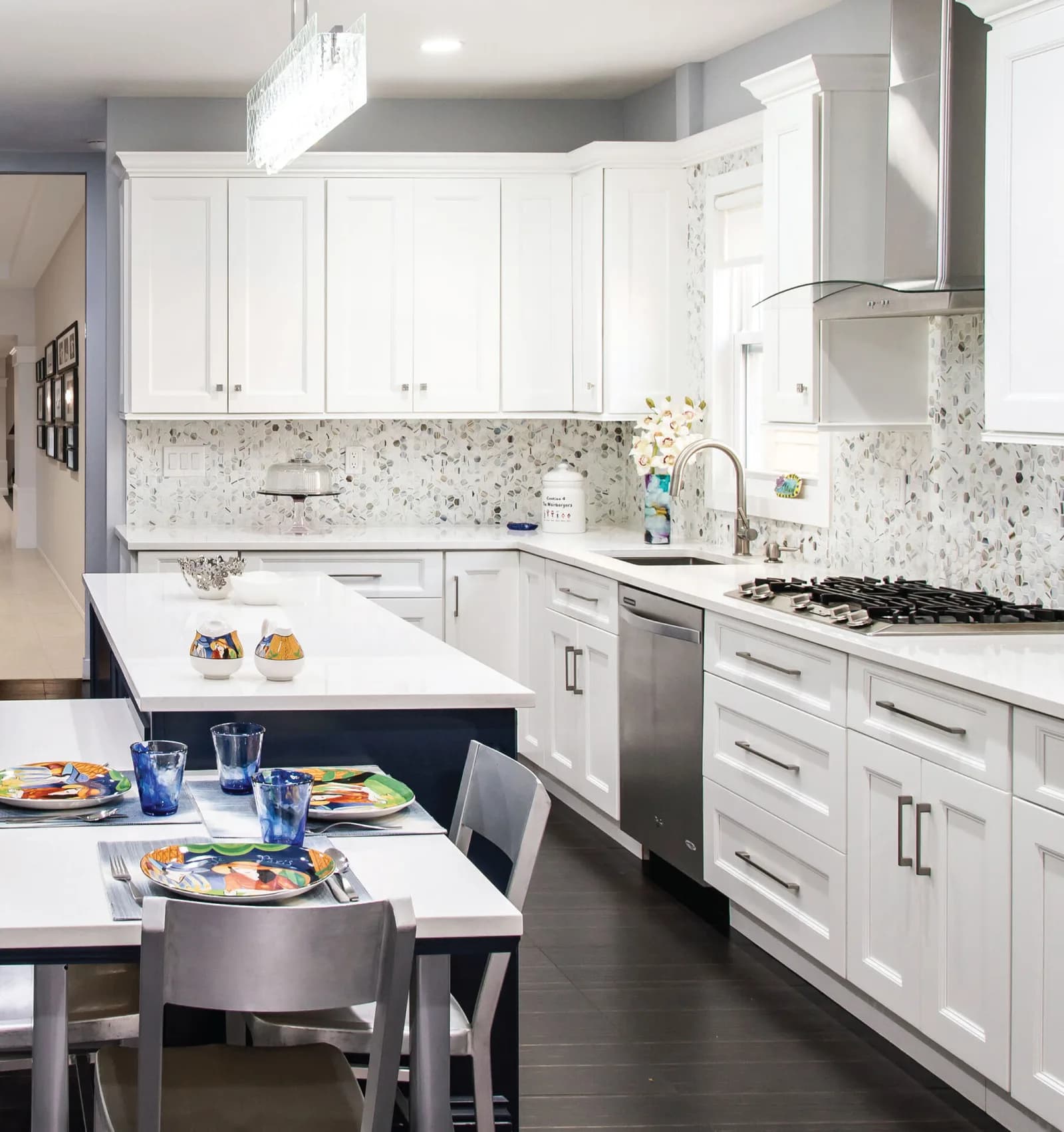
- White perimeter + Navy or Charcoal island
- White perimeter + Natural wood island (butcher block or wood cabinet finish)
- Gray perimeter + White island
- Dark perimeter + Light island (creates contrast)
Adding a Sink to Your Island
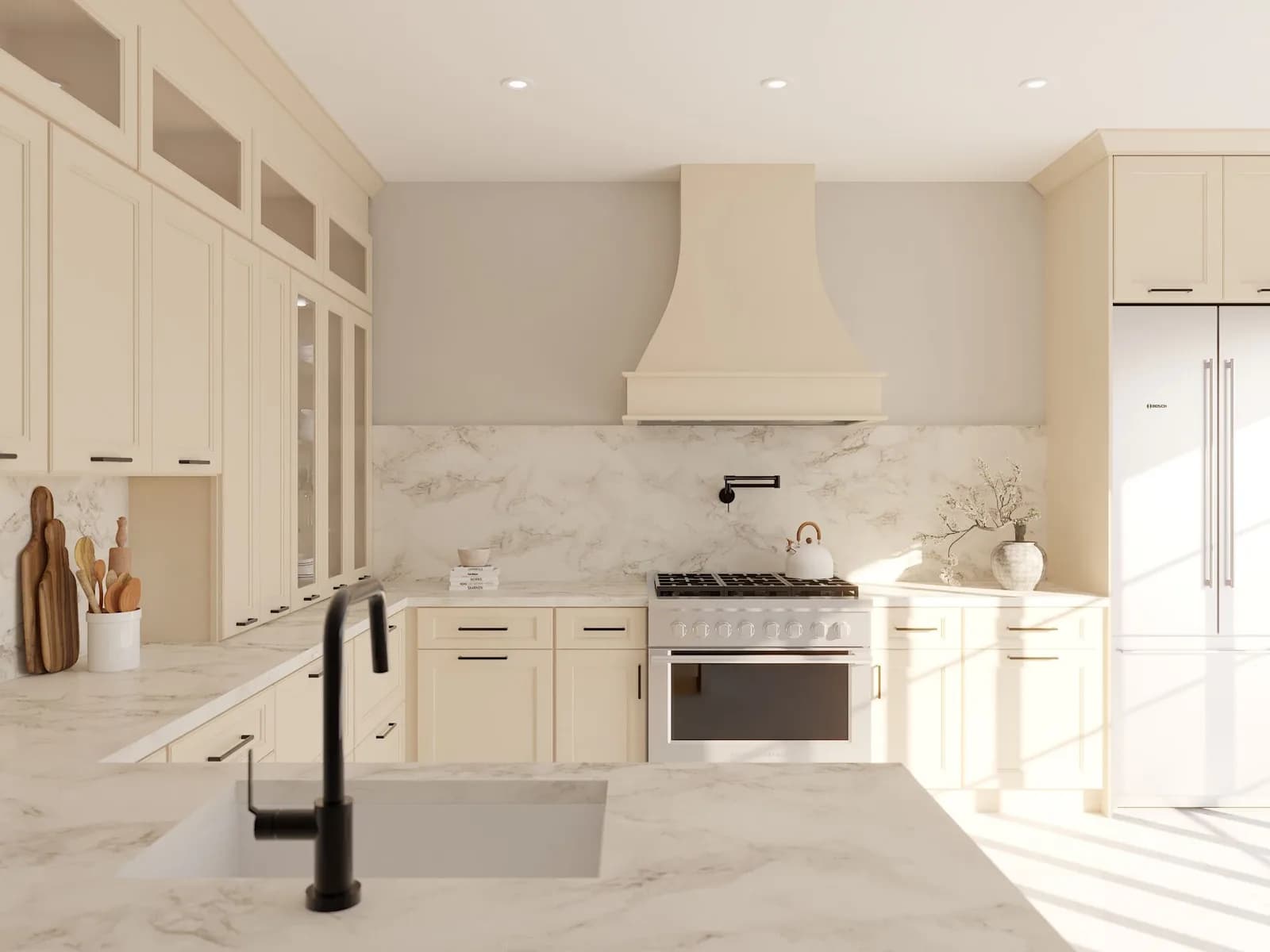
A prep sink in the island is one of the best upgrades in a larger kitchen. It creates a secondary work zone so two people can prep simultaneously without fighting over the main sink.
Island sink planning considerations:
- Plumbing drain lines need to run through the floor (added cost but worth it)
- Allow space for the sink base cabinet (30"–36" wide) plus adjacent counter space
- Garbage disposal can be included under island
- If you're planning a kosher kitchen, an island sink is often the dedicated pareve sink
Recommended Island Cabinet Lines
For islands, you want cabinets that hold up to heavy daily use — sturdy drawer boxes, quality slides, and durable finishes.
Best for budget-conscious builds:
- Fabuwood — plywood box construction, dovetail drawers, soft-close standard; excellent value
- CNC Cabinetry — wide door style selection, can match island to perimeter
- Kitchen Craft (Semi-Custom) — specify exact widths, 500+ finish combinations
- Brighton Cabinetry (Full Custom) — any dimension to 1/16", inset options, wood species selection
Island Countertop Options
The countertop is the star of the island. Popular choices:
Quartz — Durable, low-maintenance, huge range of colors and looks. Most popular choice for NJ homes.
Granite — Natural stone, each slab is unique. Requires sealing but adds warmth and value.
Butcher Block — Warm, natural, great for prep. Requires periodic oiling. Works beautifully as a contrast to painted cabinets.
Waterfall edge — The countertop wraps down one or both sides of the island. Premium look, increasingly popular.
Symco Kitchens offers countertop fabrication and installation as part of our turn-key service — so you can design your island cabinets and countertop with the same team.
Plan Your Island With Us
Our design team has laid out hundreds of NJ kitchen islands. We'll help you plan the right size, cabinet configuration, and finish to fit your kitchen and your family's lifestyle. Get a free estimate or visit our showroom in Howell, NJ.
Frequently Asked Questions
What is the minimum kitchen size for an island?
You need at least 42 inches of clearance on all sides of the island — this is both a safety standard and required by most NJ building codes. A galley kitchen needs to be at least 10 feet wide for even a small island. For a comfortable two-cook kitchen, 48 inches on the working side is recommended.
What is the standard size for a kitchen island?
A small island is typically 2'×4' to 3'×5'. A medium island is 3'×6' to 4'×8'. Large islands in open-plan homes can be 5'×10' or more. Islands for seating need a 12"–18" overhang to allow knee space for stools.
Can I add a sink to my kitchen island?
Yes — an island prep sink is one of the most popular kitchen upgrades. It requires drain lines through the floor (added plumbing cost), a 30"–36" base cabinet for the sink, and a garbage disposal if desired. In kosher kitchens, the island sink often serves as the dedicated pareve sink.
Ready to Start Your Kitchen Project?
Get a free estimate and expert design help from our team.